


Story Behind “Fjara”
The Beach That Became a Phenomenon
“Fjara”—Icelandic for “beach”—emerged as the unexpected centerpiece of Sólstafir’s fourth album Svartir Sandar (Black Sands) in 2011. While the Icelandic band had spent over a decade refining their sound from black metal toward atmospheric post-metal, nobody anticipated that this seven-minute meditation on betrayal and endings would become their defining song. The track hit number 1 on Iceland’s single charts and remained on the country’s list of top 100 songs for over two decades.
Vocalist Aðalbjörn Tryggvason later acknowledged the song’s unique position: “It is without a doubt the biggest hit on the album, as it is the most pop-like track.” That description might surprise listeners encountering the song’s doomy slowness and twisted vocal delivery, but within Sólstafir’s increasingly experimental catalog, “Fjara” offered something unusually direct—a melody that stuck, lyrics that cut deep, and a structure that built toward catharsis rather than chaos.
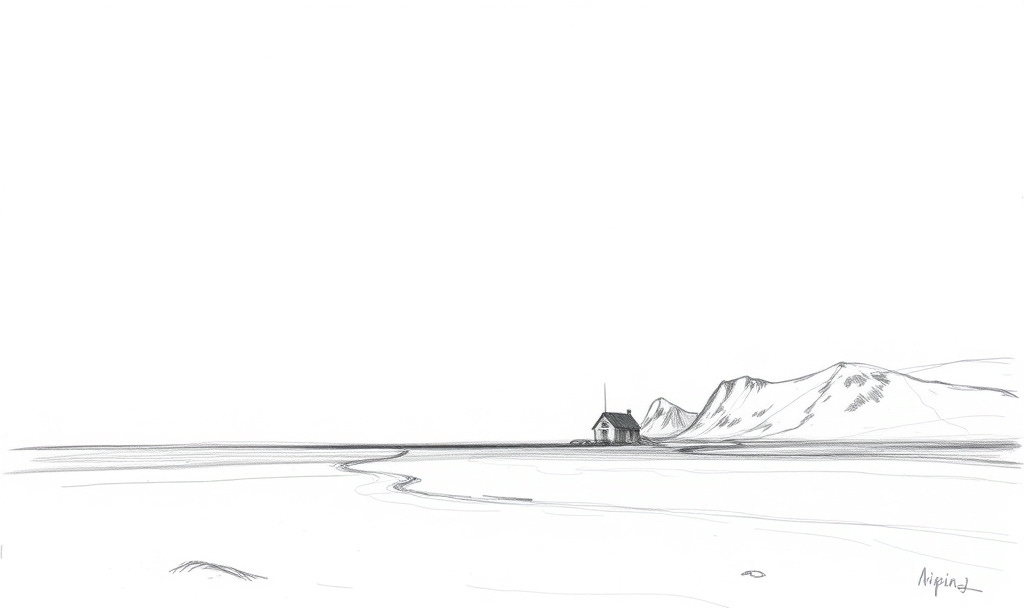
From Viking Metal to Sigur Rós Territory
Sólstafir—meaning “crepuscular rays” or sun beams in Icelandic—was formed in 1995 by Aðalbjörn Tryggvason, Halldór Einarsson, and Guðmundur Óli Pálmason. Their early work explored black metal and Viking metal territory, but by Svartir Sandar, the band had moved into what one reviewer described as “experimental atmospherics of the type practiced by fellow Icelanders Sigur Rós.” The comparison wasn’t entirely flattering from metal purists, but it captured how Sólstafir had begun prioritizing texture and emotion over aggression.
“Fjara” exemplifies this transformation. Built around repeating guitar phrases and Tryggvason’s distinctive vocals—often compared to Robert Smith of The Cure—the song explores themes of betrayal, lies, and the weight of secrets. The Icelandic lyrics translate to stark imagery: “Bones rotting in the earth, like your secrets that you long kept from me. But blood weighs more than silence.”
“Fjara” Recording and Production Details
Sundlaugin Studio and Icelandic Landscapes
Sólstafir recorded “Fjara” at Sundlaugin Studio and various locations across Iceland in May 2011. The band self-produced alongside Fredrik Reinedahl, with mixing handled at Sundlaugin and mastering completed at The Mastering Room. The album was released on Season of Mist in October 2011.
The production captures the band’s expanded sonic palette, incorporating keyboards and electric piano played by Halldór A. Björnsson, saxophone by Steinar Sigurðsson, and spoken word passages by Gerður G. Bjarklind. The layered approach creates atmospheric depth while maintaining the song’s essential doom-laden heaviness.
Building Texture Through Collaboration
The recording sessions featured the core lineup of Aðalbjörn Tryggvason on vocals and guitar, Sæþór Maríus Sæþórsson on second guitar, Svavar Austmann on bass, and Guðmundur Óli Pálmason on drums. Guest contributions included male backing vocals from Hallgrímur Jón Hallgrímsson and female backing vocals from Ragnheiður Eiriksdottir, adding haunting textures to the song’s climactic passages.
The band’s choice to sing in Icelandic rather than English proved crucial to “Fjara’s” impact. As one early listener noted, “not understanding the lyrics makes it better for me. I love when bands sing in their native language.” The unfamiliarity added mystery while allowing the vocal melodies to function almost instrumentally.
Notes About “Fjara” by Sólstafir
Release Date: October 14, 2011 (album); January 2012 (music video)
Duration: 7:16
Genre: Post-Metal / Doom Metal / Psychedelic Rock
Album: Svartir Sandar (4th studio album, track 2 of 12)
Label: Season of Mist
Producers: Aðalbjörn Tryggvason, Fredrik Reinedahl
Recording Location: Sundlaugin Studio and various locations in Iceland
Chart Performance: #1 in Iceland singles chart; remained on Iceland’s top 100 songs list for 20+ years
Sólstafir “Fjara” Era Band Details
Album Details
Album: Svartir Sandar (Black Sands)
Release Date: October 14, 2011 (Europe); October 18, 2011 (USA)
Label: Season of Mist (SOM 247)
Producers: Aðalbjörn Tryggvason, Fredrik Reinedahl
Recording Location: Sundlaugin Studio and various places in Iceland, May 2011
Mastering: The Mastering Room
Album Format: 2CD, double vinyl, digital
Album Concept: Reference to Iceland’s volcanic black sand beaches; marked band’s full transition from black metal to atmospheric post-metal
Band Members/Personnel
Aðalbjörn Tryggvason - Vocals, guitar, producer
Sæþór Maríus Sæþórsson - Guitar
Svavar Austmann - Bass
Guðmundur Óli Pálmason - Drums
Halldór A. Björnsson - Keyboards, electric piano (guest)
Steinar Sigurðsson - Saxophone (guest)
Gerður G. Bjarklind - Spoken word (guest)
Hallgrímur Jón Hallgrímsson - Male backing vocals (guest)
Ragnheiður Eiriksdottir - Female backing vocals (guest)
Jón Björn Rikharðsson - Gong (guest)
Gunnar Ben - Choir conductor and arranger
Birgir Jón Birgisson, Elisabeth Carlsson - Assistant engineering
Production Notes
Album reached #7 in Iceland and #11 in Finland
Voted album of the year by Finland’s Inferno magazine, Germany’s Metal.de, and Iceland’s Morgunblaðið newspaper
Named best heavy album of the year by Finland’s Soundi magazine
Dedicated to Benedikt Bjarnason (1978-2010)
AllMusic described Sólstafir as “Robert Smith playing Krautrock in a fjord”
Limited first pressing in digipak format with 28-page booklet
Multiple vinyl pressings in various colored variants
Interesting Facts About “Fjara”
The Coffin at Skógafoss Waterfall
The music video for “Fjara,” directed by Bowen Staines and co-director Gunnar B. Guðbjörnsson, became almost as iconic as the song itself. The video follows actress and musician Rebekka Kolbeinsdóttir through Iceland’s wilderness, wearing a thin wedding dress in November weather while dragging a 70-kilogram timber coffin across volcanic landscapes. The production culminated in a memorable scene at Skógafoss waterfall where the coffin was pulled to the edge and sent plummeting over the falls.
Drummer Guðmundur Óli Pálmason himself waded into the rushing water, tied only by a bungee cord, to position the coffin. He was quoted saying: “I’m not really nervous about going over, I’m just ready to finally get rid of this thing!” The video won Best Music Video at Iceland’s X-ið Music Awards in 2012. Aðalbjörn Tryggvason later joked to press: “I think we should get paid by the Iceland Tourist Board or Icelandair after publishing the video. We have received a pile of emails with questions on landmarks and locations in the video and respond to them daily.”
The Cover That Honored the Original
In 2014, Icelandic band Legend covered “Fjara” for a split 7” release, with ex-Mínus frontman Krummi Bjorgvins on vocals. The cover transformed Sólstafir’s post-metal anthem into what reviewers called “a dark-pop number worthy of Depeche Mode or The Mission.” The choice to cover such a well-known track was described as “ballsy,” but Legend pulled it off with style, demonstrating how the song’s essential melody could transcend genre boundaries.
The cover reflected “Fjara’s” unusual crossover appeal. While the song appeared on metal festival lineups and topped metal magazine year-end lists, its doom-laden beauty also attracted listeners from post-rock, shoegaze, and alternative scenes. One early reviewer captured this quality perfectly: “Fjara is a slow, doom-y song that’s quite beautiful and, to me, quite arresting. It made me stop, pay attention, become fully drawn into the music, and start playing it again as soon as it finished.”
Common Questions
Q: What does “Fjara” mean in Icelandic? A: “Fjara” translates to “beach” in Icelandic. The word connects to the album title Svartir Sandar (Black Sands), referencing Iceland’s distinctive volcanic black sand beaches formed from basaltic lava.
Q: What is “Fjara” by Sólstafir about? A: “Fjara” explores themes of betrayal, broken trust, and the weight of hidden secrets. The lyrics address someone who kept painful truths hidden, with imagery like “bones rotting in the earth, like your secrets” and “lies like the viper’s bite.” The song depicts accepting an ending and walking away from destructive relationships.
Q: Who directed the “Fjara” music video? A: The music video was directed by Bowen Staines and co-directed by Gunnar B. Guðbjörnsson. It was filmed in November 2011 across Iceland’s landscape, featuring actress Rebekka Kolbeinsdóttir pulling a coffin through the wilderness and culminating at Skógafoss waterfall. The video won Best Music Video at the 2012 X-ið Music Awards.
Q: What genre is Sólstafir? A: Sólstafir evolved from black metal origins to post-metal and psychedelic rock. By the time of “Fjara” and Svartir Sandar, they had moved into atmospheric, doom-influenced territory often compared to Sigur Rós. AllMusic famously described their sound as “Robert Smith playing Krautrock in a fjord.”
Q: Why is “Fjara” so popular? A: “Fjara” hit #1 on Iceland’s singles chart and remained on the country’s top 100 songs list for over 20 years. Its success stems from being Sólstafir’s most accessible track—a doomy yet melodic song with emotional directness that transcended metal genre boundaries while maintaining the band’s atmospheric power and distinctive Icelandic identity.