


Story Behind “Efsane”
From Thrash Metal to Turkish Experimental Prog
The title means “The Legend” in Turkish, and by 1996, Nekropsi had earned that designation through transformation rather than consistency. When drummer Cevdet Erek and guitarist Erem Tanyeri formed the band in 1989 at Istanbul’s Nişantaşı Anadolu Lisesi, they called themselves “Necropsy” and played straightforward thrash metal. Their 1992 demo “Speed Lessons Part 1” sold 700 copies through local music stores and mail order - respectable numbers for Turkey’s underground metal scene.
Quick Note: Just renewed my Bandcamp and SoundCloud catalogs. Want to hear my music? Bandcamp | SoundCloud
But something shifted during the three years between that demo and the recording of Mi Kubbesi. The lineup changed, bringing in guitarist Cem Ömeroğlu, multi-instrumentalist Tolga Yenilmez, and bassist Cenk Turanlı. More importantly, their sound evolved dramatically. The thrash remained in their DNA - you can hear it in the intensity and technical precision - but Nekropsi began incorporating Turkish folk instruments, irregular time signatures, and a willingness to let tracks breathe and develop organically. “Efsane” exemplifies this evolution, moving from folk dance atmosphere with chanted “Hey, hey!” vocals into darker, more brooding territory.
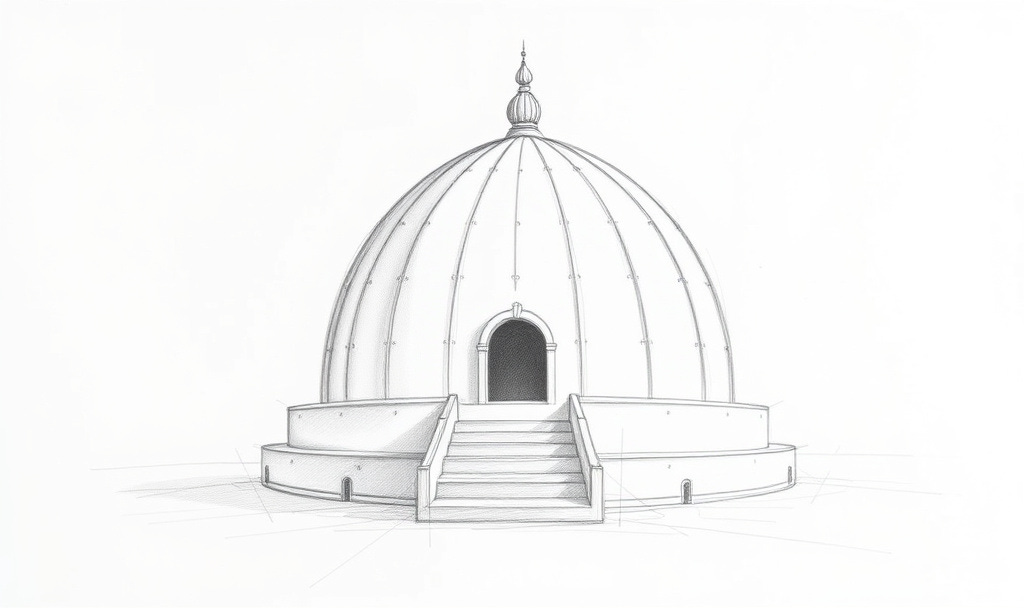
The band spent three years working on Mi Kubbesi, experimenting with what they called “transsexual jazz” - their own description for music that refused categorization. Traditional Turkish instruments like the baglama, kemençe, darbuka, and bendir appeared alongside electric guitars and complex drum patterns. The result was something genuinely unique in Turkey’s rock landscape: instrumental progressive rock that honored local musical traditions while pushing into experimental territory that would have sounded at home on European progressive labels.
Zero Promotion, Underground Legend
Ada Müzik, a label known for signing Turkish folk and left-wing musicians since the mid-1980s, took a chance on Nekropsi’s experimental direction. The label had begun concentrating on rock and alternative bands by the mid-90s, recognizing that Turkey’s music scene was ready for something beyond commercial pop and traditional Anatolian rock. Mi Kubbesi - the title translates to “The Dome of Mi” (as in “do, re, mi”) - arrived in late 1996 on cassette, the dominant format in Turkey from the 1980s through 2006.
Despite zero promotional campaign, the album sold well within university communities and underground music circles. International recognition followed quickly. French progressive label Musea noticed the album, as did American specialty labels Cuneiform and Laser’s Edge. Critics struggled to find comparisons, eventually settling on references to King Crimson’s experimental phase, Tool’s technical precision, and the psychedelic atmospheres of Ozric Tentacles and Pink Floyd. But these were approximate rather than accurate - Nekropsi sounded like themselves.
“Efsane” became one of the album’s standout tracks, its 6:32 runtime allowing space for dramatic mood shifts and rhythmic complexity. The track opens with folk-inflected melodies before descending into heavier, more ominous passages. This dynamic range - from celebratory to haunting - captured what made Mi Kubbesi essential: the band’s refusal to choose between their thrash metal origins, progressive rock ambitions, and Turkish musical heritage.
“Efsane” Recording and Production Details
Three Years in the Making
Mi Kubbesi took three years to complete, with recording sessions stretching from 1993 to 1996. The extended timeline allowed Nekropsi to experiment extensively, trying different approaches and instrumentation until they captured the sounds they heard in their heads. Tolga Yenilmez handled multiple roles beyond his guitar and vocal duties, serving as mixing, editing, and mastering engineer. Fazıl Atuk contributed additional mixing and mastering work, while Oğuz handled editing duties.
For “Efsane” specifically, the production emphasized the contrast between acoustic and electric elements. Cenk Turanlı played both standard bass and fretless bass, the latter providing fluid, singing tones that enhanced the track’s Middle Eastern character. The fretless bass allowed for microtonal inflections - notes falling between the standard Western scale - that connected naturally to Turkish folk traditions where such subtle pitch variations are common.
Instrumental Palette and Performance
The track’s folk dance section features traditional percussion instruments. Cevdet Erek, whose drumming throughout Mi Kubbesi combines jazz complexity with thrash metal intensity, adds darbuka and bendir - Turkish hand drums that provide rhythmic textures impossible to achieve with Western drum kits alone. The “Hey, hey!” vocal chants that punctuate this section recall traditional folk celebrations, grounding the experimental music in recognizable cultural touchstones.
Then everything stops. The mood shifts completely as guitars take over with darker, more distorted tones. This dramatic contrast - celebratory folk atmosphere dissolving into ominous progressive metal - exemplifies Nekropsi’s compositional approach. Rather than smooth transitions, they embraced sudden breaks and jarring shifts, keeping listeners engaged through unpredictability.
Cem Ömeroğlu and Tolga Yenilmez’s dual guitar work creates layered textures throughout. Their tone is reverberant and psychedelic, contributing to the album’s spacey atmosphere while maintaining enough clarity for technical riffs to cut through. The clean guitar tones they favored - eschewing the constant distortion typical of their thrash metal roots - allowed for greater dynamic range and melodic expression.
Notes About “Efsane” by Nekropsi
Release Date: Late 1996 (cassette); later CD reissue
Duration: 6:32
Genre: Progressive Rock / Experimental Rock / Middle Eastern Fusion
Album: Mi Kubbesi (debut album, track 3 of 16)
Label: Ada Müzik
Total Album Length: Approximately 73 minutes
Meaning: “Efsane” translates to “The Legend” in Turkish
Format: Originally released on cassette (popular Turkish format 1980s-2006), later CD
Nekropsi “Efsane” Era Band Details
Album Details
Album: Mi Kubbesi (The Dome of Mi)
Release Date: Late 1996
Label: Ada Müzik
Recording Period: 1993-1996 (three years of work)
Production: Tolga Yenilmez (mixing, editing, mastering), Fazıl Atuk (mixing, mastering), Oğuz (editing)
Remastering: Marsandiz
Photography: Kadir Aktay, Berat, Servet
Cover Art: Nekropsi
Album Concept: Blend of progressive rock, thrash metal, Turkish folk, and experimental jazz
Band’s Genre Description: “Transsexual jazz, an invention which has no reference”
Band Members/Personnel
Cem Ömeroğlu - Guitar, vocals
Cevdet Erek - Drums, vocals, darbuka (Turkish hand drum), bendir (frame drum)
Tolga Yenilmez - Guitar, vocals, effects, sampling, bass (on select tracks), fretless bass, kemençe (Turkish string instrument), bowed bass, baglama (Turkish lute); mixing, editing, mastering engineer
Cenk Turanlı - Bass (tracks 1-6, 9, 11, 12, 14-16), fretless bass (on “Efsane” and other tracks), vocals
Album Production Notes
Three-year recording process allowing extensive experimentation
Incorporated Turkish traditional instruments: darbuka, bendir, kemençe, baglama
Mostly instrumental with occasional wordless vocals and chanting
Originally released on cassette, Turkey’s dominant format through mid-2000s
No promotional campaign, sold through word-of-mouth and underground networks
Gained international attention from French label Musea and American labels Cuneiform and Laser’s Edge
Strong following in Turkish university communities
Rated #305 in best albums of 1996 on RateYourMusic
Interesting Facts About “Efsane”
The Jimmy Page and Robert Plant Connection
Two years after Mi Kubbesi‘s release, Nekropsi received validation that would have seemed impossible during their thrash metal demo days. In 1998, Led Zeppelin’s Robert Plant and Jimmy Page brought their post-reunion tour to Istanbul’s Bostancı Gösteri Merkezi. Nekropsi was selected as the opening act - a remarkable achievement for an instrumental progressive band that had released just one album.
The performance proved transformative for the band’s profile. Plant and Page represented rock royalty, and their decision to tour with Nekropsi introduced the Turkish band to audiences who might never have encountered their experimental sound. Reviews described Nekropsi’s performance as “glorious,” noting how their complex compositions and dynamic shifts held the attention of crowds expecting straightforward rock. The contrast between Nekropsi’s avant-garde instrumentals and Plant/Page’s classic rock catalog only emphasized how far Turkish progressive music had evolved.
This exposure led to increased international interest in Mi Kubbesi, with progressive rock communities in Europe and North America discovering the album through specialist labels and mail order catalogs. The album became one of those underground classics that circulated among prog enthusiasts seeking music that pushed boundaries rather than retreading familiar territory.
The Evolution from “Necropsy” to Nekropsi
The band’s name change from “Necropsy” to “Nekropsi” reflected more than simple Turkification of spelling. By dropping the English version, they signaled their commitment to creating music rooted in Turkish cultural identity rather than imitating Western models. This wasn’t about nationalism - Nekropsi’s music drew heavily from King Crimson, Pink Floyd, and Tool - but about synthesis rather than imitation.
The band members have described their approach as free from genre constraints, viewing “progressive” not as a style but as a way of seeing musical possibilities. This philosophy allowed them to incorporate aksak rhythms - the irregular time signatures common in Turkish and Balkan folk music - alongside Western progressive rock structures. “Efsane” exemplifies this synthesis, with its folk dance sections and Middle Eastern melodic inflections existing naturally alongside heavy guitar work and complex drumming.
Cevdet Erek, the band’s founding drummer, went on to become a respected academic (now a professor) specializing in sound, space, and architecture, with notable work in film composition. Cem Ömeroğlu developed expertise in sound technology and recording. Their intellectual approach to music - treating composition as exploration rather than entertainment - informed Nekropsi’s distinctive sound from the beginning. The three years spent creating Mi Kubbesi allowed them to follow ideas wherever they led, resulting in an album that remains one of Turkey’s most ambitious rock recordings.
Common Questions
Q: What does “Efsane” mean in English? A: “Efsane” translates to “The Legend” in Turkish. The title proved apt, as the track became one of the standout pieces on Mi Kubbesi, an album that achieved legendary status in Turkey’s progressive rock scene. The title also reflects the band’s ambition to create music worthy of that designation.
Q: What genre is Nekropsi’s “Efsane”? A: “Efsane” blends progressive rock, experimental music, and Middle Eastern influences with traces of the band’s thrash metal origins. Nekropsi described their overall style as “transsexual jazz,” emphasizing that their music defied conventional categorization. The track specifically features folk-inflected melodies, irregular time signatures, and dramatic dynamic shifts characteristic of 1970s progressive rock.
Q: What instruments are used in “Efsane”? A: The track features electric guitars, bass (including fretless bass for microtonal inflections), drums, and traditional Turkish instruments including darbuka and bendir (hand drums). Cenk Turanlı’s fretless bass work is particularly prominent, providing the fluid, singing tones that enhance the Middle Eastern character of the composition.
Q: How long did it take Nekropsi to record Mi Kubbesi? A: Three years, from 1993 to 1996. This extended recording period allowed the band to experiment extensively with different approaches, instrumentation, and compositional ideas. The lengthy process resulted in a 73-minute album that demonstrated remarkable sonic variety and compositional ambition rare in Turkish rock.
Q: How did Nekropsi’s sound evolve from their early work? A: Nekropsi began as a thrash metal band called “Necropsy,” releasing their demo “Speed Lessons Part 1” in 1992. By the time they recorded Mi Kubbesi, they had evolved into an experimental progressive rock band incorporating Turkish folk instruments, complex time signatures, and psychedelic atmospheres while retaining their technical precision and intensity from the thrash metal years.