
Artist Spotlight: David Bowie’s Top 10 Essential Tracks 🌟
Brixton's David Bowie changed music forever. His top 10 tracks from Major Tom to Ziggy to the Thin White Duke, five decades of fearless reinvention revealed.
The Brixton-born shapeshifter who spent five decades proving that reinvention itself could be an art form.
Most artists struggle to define themselves once. David Bowie did it a dozen times, and made each identity feel like the only truth that mattered. Born David Robert Jones in Brixton on January 8, 1947, he spent nearly five decades morphing from Major Tom to Ziggy Stardust to the Thin White Duke to the Goblin King, leaving a trail of masterpieces that redefined rock, glam, soul, electronic music, and everything in between.
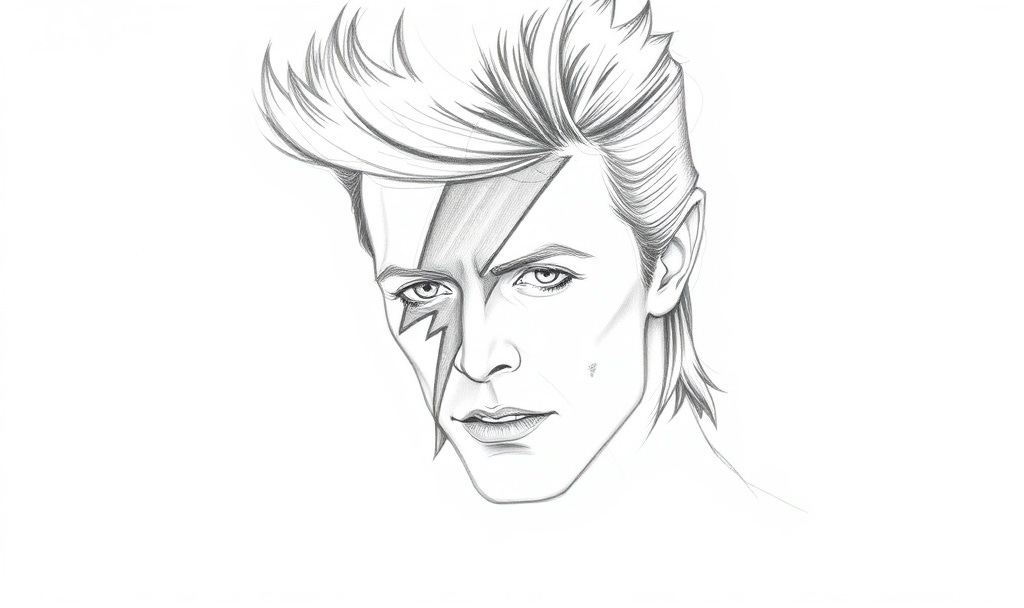
10. “Rebel Rebel” (1974)
Album: Diamond Dogs
Bowie strips glam rock down to its raw, riff-driven essence. That iconic guitar line, played by Bowie himself after Mick Ronson had left the Spiders from Mars, is one of rock’s most recognizable openings. Lyrically, it’s Bowie’s most direct celebration of gender fluidity and nonconformity, delivered with swaggering confidence rather than theatrical distance. The song marked his transition from the Ziggy era into something harder and more American-influenced, written during the Diamond Dogs sessions that originally aimed to adapt Orwell’s 1984. It remains his most straightforward rock song, proving Bowie could deliver a killer riff without the conceptual complexity.
9. “Ashes to Ashes” (1980)
Album: Scary Monsters (and Super Creeps)
Bowie brings Major Tom back, but this time as a “junkie, strung out in heaven’s high, hitting an all-time low.” Released in August 1980, it was his fastest-moving UK single to date, hitting #1 in just two weeks. The song marked Bowie’s closure on the 1970s, acknowledging his own struggles with cocaine addiction through Major Tom’s tragic fate. Musically, it’s an art-pop masterpiece featuring Chuck Hammer’s guitar synthesizer creating symphonic textures and a complex three-bar piano loop that defied standard pop structures. The accompanying music video, costing £250,000 and featuring Bowie in a Pierrot costume with Steve Strange and other Blitz Club New Romantics, was the most expensive ever made at the time and helped define MTV’s visual language.
8. “Let’s Dance” (1983)
Album: Let’s Dance
Bowie’s biggest commercial success proved he could dominate the pop mainstream without compromising his artistic credibility. Produced by Chic’s Nile Rodgers in just 17 days, the album yielded three massive hits, with the title track hitting #1 in both the UK and US. The funky, guitar-driven production marked Bowie’s shift toward accessible pop after the experimental Berlin Trilogy, and the song’s success launched his “Serious Moonlight” tour, his most commercially successful ever. The album sold over 10 million copies worldwide. While some critics viewed it as Bowie chasing commercial success, “Let’s Dance” demonstrated his ability to adapt to the MTV era while maintaining the charisma that made him a star.
7. “Changes” (1971)
Album: Hunky Dory
The manifesto. “Ch-ch-ch-changes” became Bowie’s autobiography in miniature, a song about constant reinvention that predicted his entire career trajectory. Written on piano with Rick Wakeman contributing that distinctive opening riff, it captured the generational divide of the early seventies: “And these children that you spit on / As they try to change their worlds / Are immune to your consultations / They’re quite aware of what they’re going through.” The song initially flopped as a single but became one of his most enduring anthems, covered countless times and used in films, commercials, and as an anthem for anyone refusing to stay static. Bowie later said he “basically wrote it about not wanting to be the same person all the time.”
6. “Under Pressure” (1981)
Single with Queen
Lightning in a bottle. Bowie showed up at Queen’s studio to sing backing vocals on “Cool Cat,” the session morphed into a jam, and history happened. That iconic bassline, one of rock’s most recognizable, came from spontaneous improvisation, as did much of the song’s structure. The vocal interplay between Bowie and Freddie Mercury is electric, two of rock’s most theatrical vocalists trading lines about the pressures of modern life. The song hit #1 in the UK and has been endlessly sampled (Vanilla Ice’s “Ice Ice Baby” notoriously borrowed that bassline). The final version features vocal scatting that testifies to its improvisational origins, capturing a once-in-a-lifetime meeting of two legends at their peak.
5. “Starman” (1972)
Album: The Rise and Fall of Ziggy Stardust and the Spiders from Mars
The song that introduced the world to Ziggy Stardus, and changed everything. Written as a late addition to the album after RCA demanded a single, “Starman” replaced a Chuck Berry cover and became Bowie’s first major hit since “Space Oddity” three years earlier. The octave leap in the chorus, ”There’s a starman waiting in the sky”, echoes Judy Garland’s “Over the Rainbow” and demonstrates Bowie’s genius for melody. But it was his July 1972 performance on BBC’s Top of the Pops, dressed in a flame-haired, multi-colored jumpsuit, putting his arm around guitarist Mick Ronson, that truly launched him to stardom. That three minutes of television defined glam rock and gave a generation of outsiders permission to be themselves.
4. “Space Oddity” (1969)
Album: David Bowie (Space Oddity)
Bowie’s first hit introduced Major Tom, the lonely astronaut drifting into the cosmic void. Released just days before the Apollo 11 moon landing, the song tapped into the era’s space fascination while offering something darker, a meditation on isolation, disconnection, and the terrifying beauty of the unknown. Produced by Gus Dudgeon (who would later produce Elton John), it features Bowie’s melancholic vocals over folk-rock instrumentation and orchestral arrangements. The song reached #5 in the UK but was initially dismissed as a novelty record, motivating Bowie to create more complex personas. Major Tom would return in “Ashes to Ashes” eleven years later, and the song itself was re-released in 1975, hitting #1 in the UK. It remains Bowie’s calling card, the song everyone knows, even if they know nothing else.
3. “”Heroes”“ (1977)
Album: “Heroes”
Recorded entirely in Berlin, the only album of the Berlin Trilogy actually made entirely in the city, this anthem captures hope and defiance against impossible odds. The title track was inspired by Bowie watching lovers embrace by the Berlin Wall, and he channeled that image into one of rock’s most soaring anthems. Producer Tony Visconti’s innovative three-microphone setup on Robert Fripp’s guitar creates those massive, escalating walls of sound as Bowie’s vocal grows from whisper to scream. The song split into two sides: one featuring hard-edged New Wave, the other drifting into ambient soundscapes co-created with Brian Eno. Though it only reached #24 in the UK initially, it became one of Bowie’s most covered and celebrated songs. The performance at 2000’s Glastonbury Festiva, where he played it nearly 30 years after first recording it, proved its enduring power.
2. “Ziggy Stardust” (1972)
Album: The Rise and Fall of Ziggy Stardust and the Spiders from Mars
The title track that defined an era. Bowie’s bisexual alien rock star persona came to life in this three-minute masterpiece featuring Mick Ronson’s soaring guitar work and some of Bowie’s most vivid storytelling. The song tells Ziggy’s tale of fame, excess, and inevitable downfall, ”making love with his ego, Ziggy sucked up into his mind”, serving as both celebration and warning about rock stardom. Recorded at Trident Studios from November 1971 to February 1972 with producer Ken Scott, the album was largely recorded live with minimal overdubs. Bowie famously “retired” Ziggy at London’s Hammersmith Odeon on July 3, 1973, shocking fans and band members alike. The character’s influence extended far beyond music, reshaping attitudes toward gender, sexuality, and artistic identity for generations.
1. “Life on Mars?” (1971)
Album: Hunky Dory
Bowie’s masterpiece. This piano-driven epic, featuring Rick Wakeman’s magnificent arrangemen, combines surreal imagery, social commentary, and raw emotional power into something that feels like a transmission from another dimension. The BBC called it “a cross between a Broadway musical and a Salvador Dalí painting,” and they weren’t wrong. The lyrics cascade through disconnected scenes, ”sailors fighting in the dance hall,” “Mickey Mouse has grown up a cow, creating a dreamlike narrative about escaping mundane reality.
The song has a vengeful origin story: Bowie wrote it as a response to being rejected when he submitted English lyrics for the French song “Comme d’habitude” in 1968. Paul Anka bought the rights instead and turned it into “My Way” for Frank Sinatra. Bowie later admitted, “That really made me angry... eventually I thought, ‘I can write something as big as that, and I’ll write one that sounds a bit like it’.”
Released on Hunky Dory in December 1971, it initially flopped. But when RCA reissued it as a single in June 1973, at the height of Ziggy-mani, it became a hit. The promotional video filmed at Blandford West Ten Studio features Bowie’s impossibly angular face and piercing stare, creating one of music’s most iconic images. Critics consistently rank it among Bowie’s finest work: NME readers voted it his #2 song (behind “All the Young Dudes”), The Guardian placed it fourth on his 50 greatest songs, and Rolling Stone named it one of his 30 most essential tracks.
“Life on Mars?” represents everything Bowie did best: theatrical without being camp, ambitious without being pretentious, accessible without being simple. It’s a song that rewards endless relistening, revealing new layers with each encounter. More than any other track, it captures why Bowie mattered, not just as a rock star, but as an artist who genuinely believed music could transport us somewhere better.
Honorable Mentions That Almost Made It:
“Fame” (1975) - His first US #1, co-written with John Lennon
“The Jean Genie” (1973) - Raw, Iggy Pop-influenced glam rock
“Golden Years” (1976) - Disco-funk masterpiece from Station to Station
“Suffragette City” (1972) - Pure glam rock energy
“Rock ‘n’ Roll Suicide” (1972) - Ziggy’s emotional finale
“Blackstar” (2016) - His haunting final statement


